



Automations
- Request and lead routing
- Data sync between tools
- Reports and alerts
- Document processing
- Support triage

I add AI features and agents to web applications and automate processes for startups and SMEs, fully remote. Each need is scoped first, because a plain automation sometimes does the job better than AI.

Jean-Baptiste Thery
Senior full-stack TypeScript & AI freelance developer
Agentic developer, within your rules
Available for fully remote freelance
A need might be finding answers in long documents, routing incoming requests or sparing your team a repetitive task. I meet it with the simplest tool that works: a rule-based automation with n8n or custom code, an AI feature, or an agent acting within limits you set.
The model, the data it may use, the actions it may take and the interface then follow from your data constraints, since passages sent to an external AI service leave your infrastructure.
What the engagement covers
The same four steps on every engagement, so you know what happens next and what you receive.
Send a short brief on Malt or LinkedIn: your project, budget and target date. I confirm availability and the next step.
Scope, schedule, pricing (fixed price or day rate), working hours and how we communicate, agreed in writing before work starts.
Code reviews, demos or written reports keep progress visible. Every change I deliver is reviewed and tested.
Documentation, recommendations and, for development work, code whose rights the contract assigns to you. Maintenance by agreement.
Interfaces for three AI startups, the AI coach of the product I co-founded and a search tool built for coding agents.
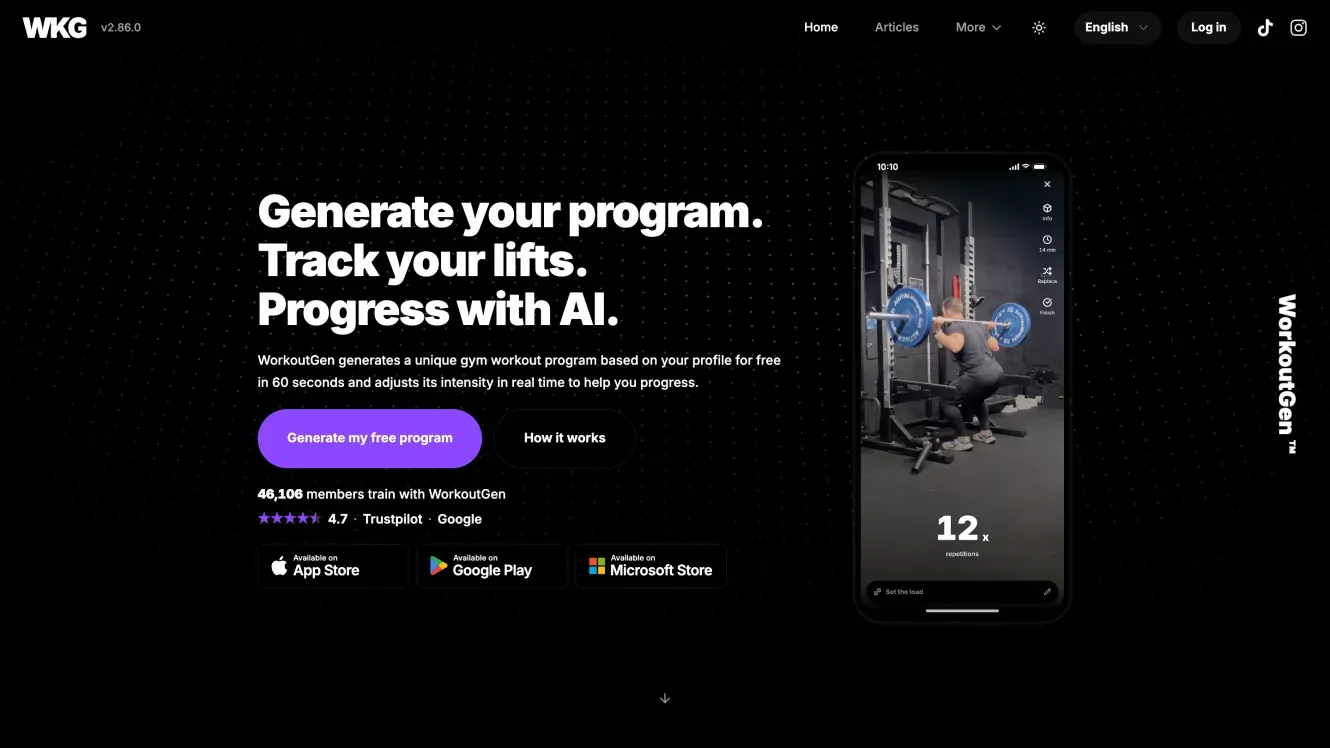
Adaptive AI coach of a workout generator
After every session, the coach adjusts each member's volume and rest from objective signals and suggests weights, with no generative model.
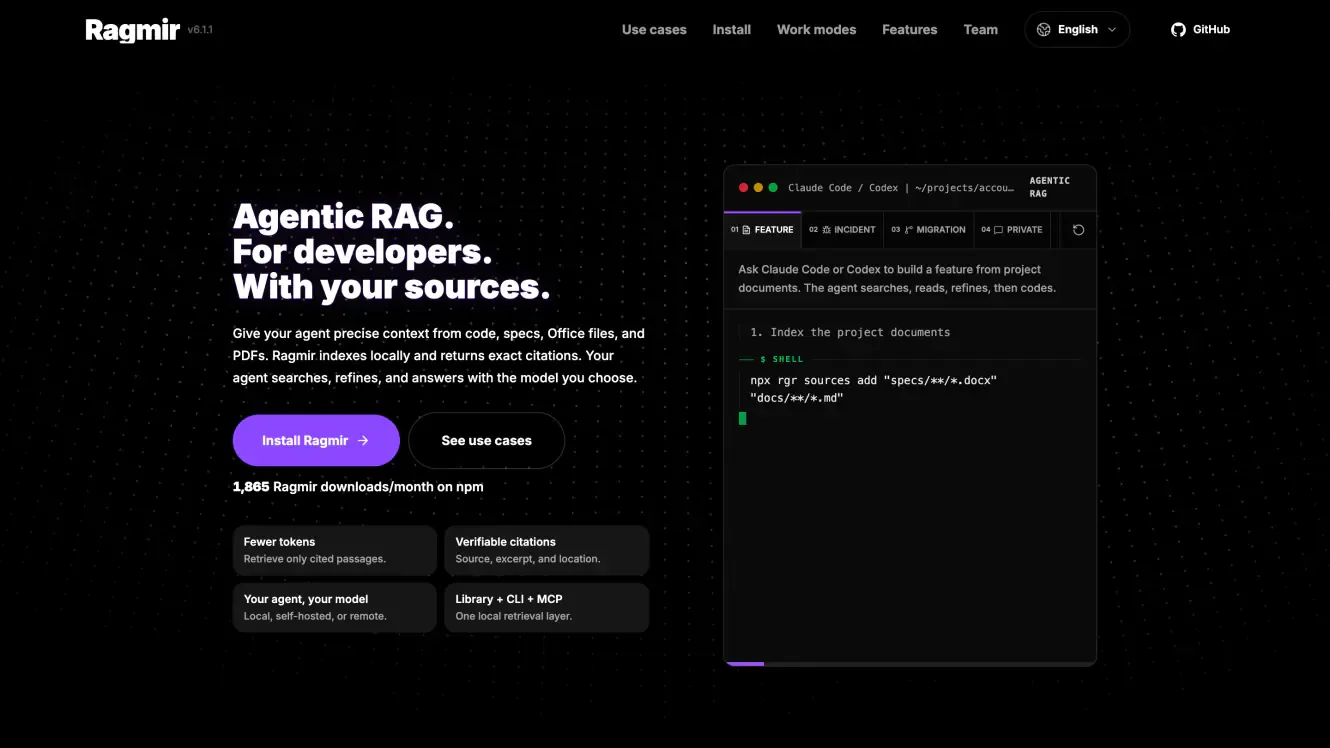
Cited search for coding agents
Coding agents such as Claude Code and Codex search your code and documents locally and get cited passages, through a CLI, a TypeScript API or an MCP server.
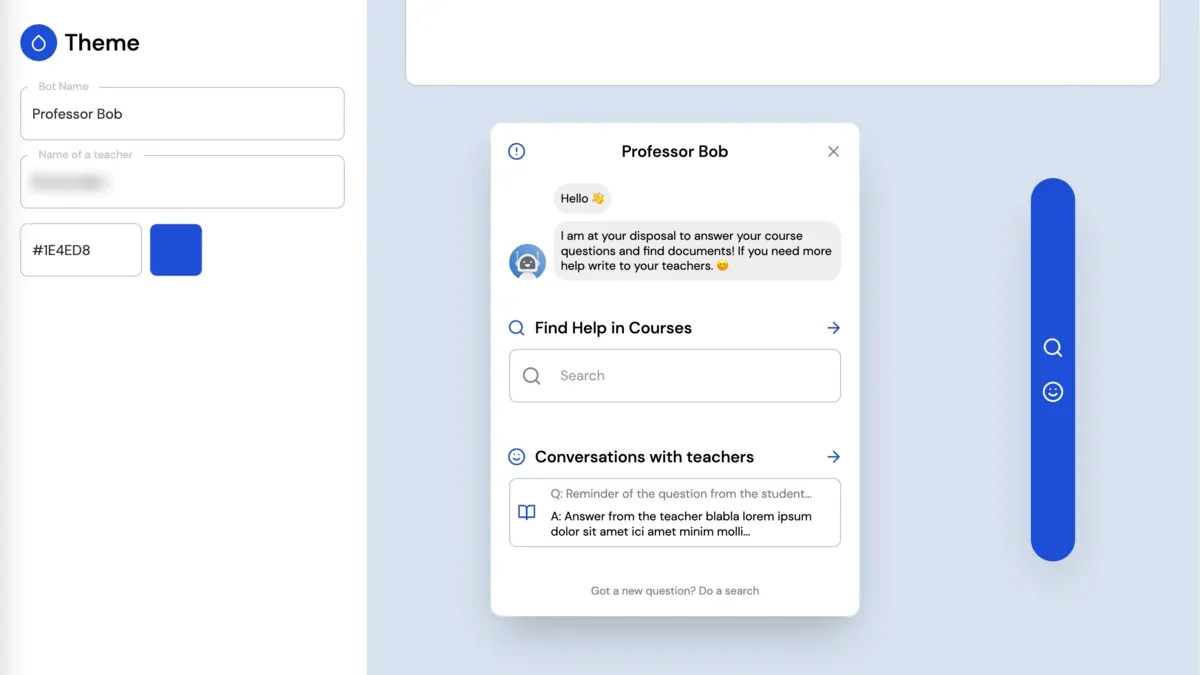
Dashboard for AI-generated questions and answers
A test-driven React dashboard to review and manage the questions and answers the AI produces, with PDF documents and several languages.
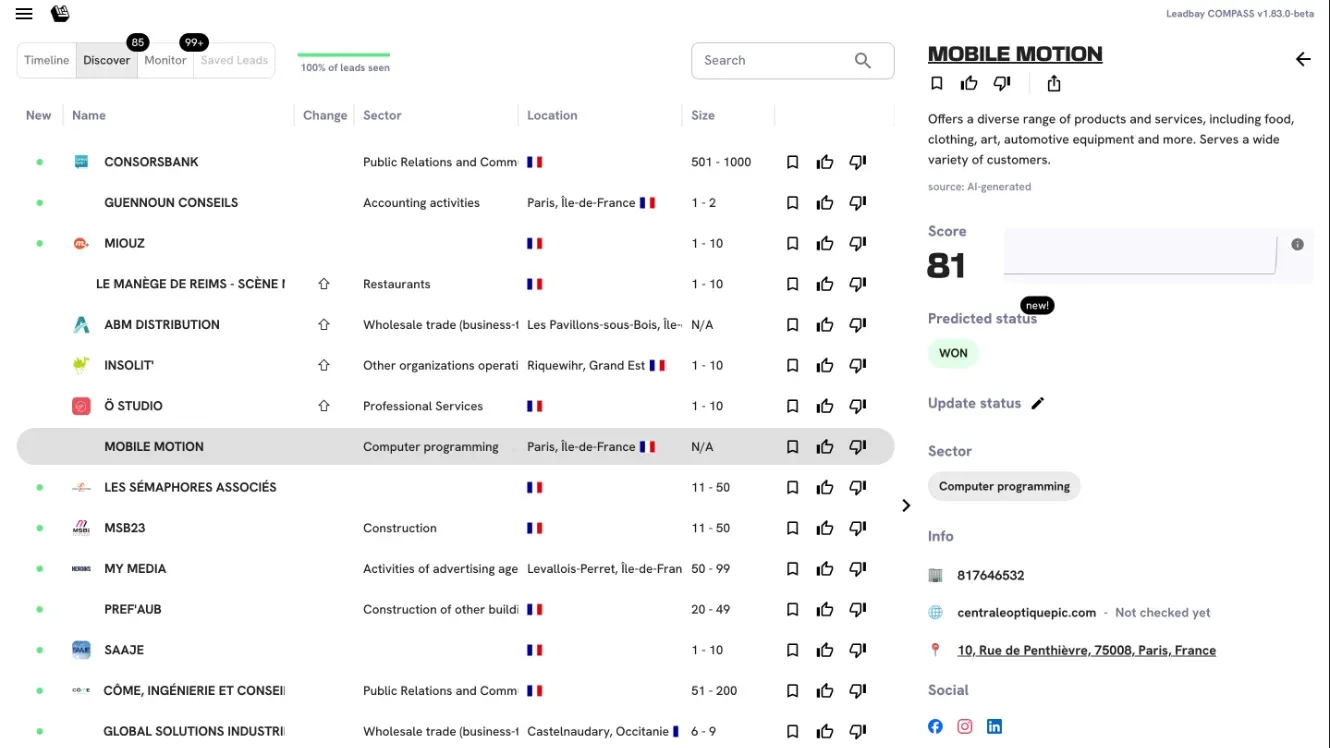
Frontend of an AI prospecting platform
Sales teams discover leads with AI, on the web and on mobile, through a React and Ionic frontend I built from scratch.
“I strongly recommend working with JB. He was instrumental in getting our frontend off the ground, handling everything with zeal, unwavering dedication, and unparalleled reliability.” LinkedIn
“Jean-Baptiste nous a aidé dans le développement frontend de notre outil Sweez. C'est un développeur talentueux et hautement compétent. Son expertise technique et sa capacité à résoudre les problèmes de manière créative font de lui un atout précieux pour toute équipe de développement. Il est fiable, consciencieux et démontre une grande attention aux détails dans son travail. Il communique bien et est force de proposition. La qualité de son code et sa capacité d'adaptation sont remarquables.” Malt
“Excellent niveau, s'acclimate vite avec son nouvel environnement de travail (compréhension de la stack, des outils de communication, de l'industrie), très autonome et même pro-actif sur la prise de décision. Excellente communication du travail en cours et restant. Se rend facilement disponible. Je recommande pour tout dev d'application web complexe et équipe haut niveau.”MaltAn AI feature is still software to design, test and maintain. I learnt that craft on projects such as Biodiv-Wind's real-time wildlife monitoring. That was before AI coding tools, and I bring the same discipline to AI work.
Through jCode, I work with public institutions, established companies and startups. My own products, WorkoutGen and Ragmir, taught me what follows a release.
How I work with AI on client code is set out on the agentic development page.
Assistants and chat in your interface, search across your documents with sources, drafting from your own data, and agents that act through your API or MCP servers, with a confirmation before sensitive actions.
No. Many processes need only a webhook, a scheduled job or an n8n workflow: cheaper, faster and easier to audit than a model. I suggest AI where rules fall short (unstructured text, classification, search), and an agent only when a task needs several steps and judgement.
Yes. With your team, I map the process, its inputs and its exceptions, then automate it step by step with n8n or custom code, with logs and alerts that show what ran.
Not necessarily. Your data constraints decide the model, the provider and what each request contains. The agentic development page sets out how I handle code and data.
We collect real examples with the results you expect and run them before each release. The results show where the feature helps, where it fails and whether a change made it better or worse.
It depends on the scope and on who will own it: a freelancer for a defined feature in an existing product, an agency for several profiles in parallel, a hire for a core feature. The guide to this choice sets out the signs and what to check.
A clearly defined feature can be quoted at a fixed price after scoping; open-ended work is billed at an indicative €550 excluding VAT per day, as of October 2026. Model and hosting costs depend on usage, so scoping estimates them too.
Tell me what you want to build or improve, your budget and your target date.